Commercial food service spaces along Cherokee Boulevard in North Shore and South Broad Street near St. Elmo encounter intense vector pressures caused by humidity and aging plumbing infrastructure. German cockroaches…
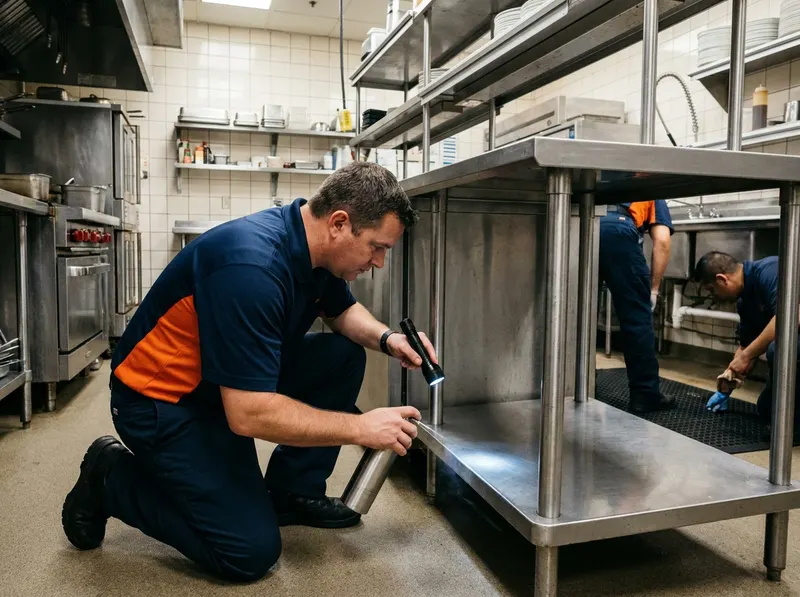
Commercial food service spaces along Cherokee Boulevard in North Shore and South Broad Street near St. Elmo encounter intense vector pressures caused by humidity and aging plumbing infrastructure. German cockroaches thrive in heat voids behind commercial ranges, refrigeration compressor compartments, and stainless steel prep tables. When DIY retail pyrethroid sprays are applied, these vectors scatter deeper into wall cavities and baseboards, creating widespread distribution rather than eradication. In contrast, tactical intervention pairs non-repellent transfer chemistry with insect growth regulators (IGRs) like hydroprene, stopping nymph development without flushing contaminants across food contact zones.
Diverse structural profiles dictate distinct treatment protocols. Historic masonry properties housing restaurants near Highland Park and the Chattanooga Choo Choo require deep masonry void dusting with desiccant silicas and immediate door-sweep installations to block exterior rodent runs. Modern slab constructions in East Brainerd and Hixson often suffer from phorid fly and drain fly infestations stemming from compromised grease traps and tile grout breakdown. Enzymatic foams are introduced directly into line drains to digest the biological film where fly larvae mature, ending the breeding cycle at the source rather than relying on surface sprays.
Decision-fit for food facilities requires weighing production disruption against health code closure risks under Hamilton County Health Department inspections. Spot-treating an active kitchen with aerosol foggers requires a complete shutdown, inventory bagging, and post-treatment washdowns that halt revenue. Non-volatile bait matrices and juvenile hormone treatments permit continuous operation without off-gassing, keeping line staff working safely while vector populations collapse over 7 to 14 days. The operational trade-off is mechanical patience: bio-enzymatic drain remediation takes 72 hours to digest organic sludge, but prevents structural plumbing damage that chemical caustic flushes provoke.
Property owners managing commissary spaces in Red Bank, Riverview, and Brainerd avoid corporate subscription locks by deploying threshold-based treatments. Routine spot maintenance suits low-risk dry storage setups, whereas wet kitchens with active dish pits require aggressive structural exclusion and monthly bio-monitoring to maintain local health code compliance.
Every job gets a firm, written price after a free on-site visit.
Tell us about your commercial kitchen vector control job in Chattanooga and we'll send a clear, written quote, usually the same day.
 Halvex Pest InterventionC